


Subscribe To

 Posts
All Comments
Friday, August 21, 2015


Pancake Bites
Pancake Bites. Use your favorite pancake mix, pour into muffin tins, add fruit, nuts, sausage, bacon, chocolate chips, etc. Bake at 350 for 12-14 minutes.

Thursday, August 20, 2015
Turn to Heaven
"We realize how little we know, how little we can control, and how dependent we are on things beyond ourselves. Those humble thoughts lead us to prayer and cause us to appeal to a higher, brighter, more knowing power. Particularly in times of crisis, in times of loss or of danger, we come face to face with our own frailty, and it seems both natural and necessary to turn to prayer."
Richard and Linda Eyre
When problems seem unsolvable and too complex to handle, we can go to the higher source of wisdom, light, and love. Perhaps we can relate in some way to Abraham Lincoln when he said, "Sometimes I am driven to my knees by the simple conviction that there is nowhere else to go!"
Prayer is not weakness; it is our access to true strength. Prayer can fortify us for the battles ahead even while it humbles and softens us in times of trial. Ironically, it actually increases our independence, while at the same time opening our hearts to heavenly help. Instead of "When all else fails, turn to heaven," perhaps a better motto is
"Turn to heaven at all times and places."

Enter into My Joy
"And seek the face of the Lord always, that in patience ye may possess your souls, and ye shall have eternal life"
Patience is not indifference. Actually, it means caring very much but being willing, nevertheless, to submit to the Lord and to what the scriptures call the "process of time."
Patience is tied very closely to faith in our Heavenly Father. Actually, when we are unduly impatient we are suggesting that we know what is best better than does God. Or, at least, we are asserting that our timetable is better than His . . .
Patience is always involved in the spiritual chemistry of the soul, not only when we try to turn the trials and tribulations—the carbon dioxide, as it were—into joy and growth, but also when we use it to build upon the seemingly ordinary experiences to bring about happy and spiritual outcomes . . .
Patience is, therefore, clearly not fatalistic, shoulder-shrugging resignation. It is the acceptance of a divine rhythm to life; it is obedience prolonged. Patience stoutly resists pulling up the daisies to see how the roots are doing. Patience is never condescending or exclusive—it is never glad when others are left out. Patience never preens itself; it prefers keeping the window of the soul open.
Patience permits us to cling to our faith in the Lord when we are tossed about by suffering as if by surf. When the undertow grasps us, we will realize that even as we tumble we are somehow being carried forward; we are actually being helped even as we cry for help . . .
. . . the longer I examine the gospel of Jesus Christ, the more I understand that the Lord's commitment to free agency is very deep—indeed, much deeper than is our own. The more I live, the more I also sense how exquisite is His perfect love of us. It is, in fact, the very interplay of God's everlasting commitment to free agency and His everlasting and perfect love for us which inevitably places a high premium upon the virtue of patience. There is simply no other way for true growth to occur.
Some of us have been momentarily wrenched by the sound of a train whistle spilling into the night air, and we have been inexplicably subdued by the mix of feelings that this evokes. Or perhaps we have been beckoned by a lighted cottage across a snow-covered meadow at dusk. Or we have heard the warm and drawing laughter of children at a nearby playground. Or we have been tugged at by the strains of congregational singing from a nearby church. Or we have encountered a particular fragrance which has awakened memories deep within us of things which once were. In such moments, we have felt a deep yearning, as if we were temporarily outside of something to which we actually belonged and of which we so much wanted again to be a part.
There are spiritual equivalents of these moments. Such seem to occur most often when time touches eternity. In these moments we feel a longing closeness—but we are still separate. The partition which produces this paradox is something we call the veil—a partition the presence of which requires our patience. We define the veil as the border between mortality and eternity; it is also a film of forgetting which covers the memories of earlier experiences. This forgetfulness will be lifted one day, and on that day we will see forever—rather than "through a glass, darkly".
There are poignant and frequent reminders of the veil, adding to our sense of being close but still outside. In our deepest prayers, when the agency of man encounters the omniscience of God, we sometimes sense, if only momentarily, how very provincial our petitions are; we perceive that there are more good answers than we have good questions; and we realize that we have been taught more than we can tell, for the language used is not that which the tongue can transmit.
We experience this same close separateness when a baby is born, but also as we wait with those who are dying—for then we brush against the veil, as goodbyes and greetings are said almost within earshot of each other. In such moments, this resonance with realities on the other side of the veil is so obvious that it can be explained in only one way!
No wonder the Savior said that His doctrines would be recognized by His sheep, that we would know His voice, that we would follow Him. We do not, therefore, follow strangers. Deep within us, His doctrines do strike the promised chord of familiarity and underscore our true identity. Our sense of belonging grows in spite of our sense of separateness; for His teachings stir our souls, awakening feelings within us which have somehow survived underneath the encrusting experiences of mortality.
This inner serenity which the believer knows as he brushes against the veil is cousin to certitude. The peace it brings surpasses our understanding and certainly our capacity to explain. But it requires a patience which stands in stark contrast to the restlessness of the world in which, said Isaiah, the wicked are like the pounding and troubled sea which cannot rest.
But mercifully the veil is there. It is fixed by the wisdom of God for our good. It is no use being impatient with the Lord over that reality, for it is clearly a condition to which we agreed so long ago. Even when the veil is parted briefly, it will be on His terms, not ours. Without the veil, we would lose that precious insulation which would constantly interfere with our mortal probation and maturation. Without the veil, our brief mortal walk in a darkening world would lose its meaning—for one would scarcely carry the flashlight of faith at noonday and in the presence of the Light of the World. Without the veil, we could not experience the gospel of work and the sweat of our brow. If we had the security of having already entered into God's rest, certain things would be unneeded; Adam and Eve did not clutch social security cards in the Garden of Eden.
And how could we learn about obedience if we were shielded from the consequences of our disobedience? And how could we learn patience under pressure if we did not experience pressure and waiting? Nor could we choose for ourselves if we were already in His holy presence, for some alternatives do not there exist. Besides, God's Court is filled with those who have patiently overcome—whose company we do not yet deserve.
Fortunately, the veil keeps the first, second, and third estates separate—hence our sense of separateness. The veil avoids having things "compound in one" to our everlasting detriment. We are cocooned, as it were, in order that we might truly choose. Once, long ago, we chose to come to this very setting where we could choose. It was an irrevocable choice. And the veil is the guarantor that our ancient choice will be honored.
When the veil which encloses us is no more, time will also be no more. Even now, time is clearly not our natural dimension. Thus it is that we are never really at home in time. Alternately, we find ourselves impatiently wishing to hasten the passage of time or to hold back the dawn. We can do neither, of course. Whereas the bird is at home in the air, we are clearly not at home in time—because we belong to eternity. Time, as much as any one thing, whispers to us that we are strangers here. If time were natural to us, why is it that we have so many clocks and wear wristwatches?
Thus the veil stands—not to shut us out forever, but to remind us of God's tutoring and patient love for us. Any brush against the veil produces a feeling of "not yet," but also faint whispers of anticipation of that moment when, in the words of today's choral hymn, "Come, Let Us Anew," those who have prevailed "by the patience and hope and the labor of love" will hear the glorious words," 'Well and faithfully done; Enter into my joy and sit down on my throne'. "
May each of us live for that special moment patiently and righteously, I pray in the name of Him who is so patient with me as I strive to be an "especial witness" for him in all the world, even Jesus Christ. Amen.
Neal A. Maxwell


French Toast Roll Up
8 slices white bread (crust cut off)
1 cup chocolate hazelnut spread
1 banana (cut in half widthwise, then quartered lengthwise)
2 large eggs
1/4 cup milk
1/4 cup sugar
1 tablespoon cinnamon
2 tablespoons butter (plus more if needed)
step-by-step directions
Using a rolling pin, roll out each slice of bread until about 1/8" thick.
Spread each slice with the chocolate hazelnut spread and one slice of the banana. Roll the bread up tightly and set aside.
In a shallow dish, whisk the eggs and milk together. In a separate shallow dish, combine the cinnamon and the sugar.
Heat a sauté pan over medium heat, add the butter and allow to melt.
Meanwhile, dip each of the roll-ups in the egg mixture and then roll in the cinnamon sugar.
Place the roll ups in the sauté pan and allow to cook for 1-2 minutes per side, until golden brown.
Remove from pan and serve warm.

Wednesday, August 19, 2015
Hands to grasp . . . hearts to inspire

We live in difficult times. Trouble seems to visit every door. Some rally to the challenges placed before them; others struggle. These neighbors, friends, associates at work, family members, and acquaintances desperately need an outstretched arm, a kind word or gesture, a generous opportunity, or another chance. Are we willing to reach out to them, to come to their rescue?
Clinton Duffy is an example to us all. When he was appointed prison warden in San Quentin, California, in 1940, he dramatically transformed a prison culture that had been treating convicts like filthy animals. He outlawed corporal punishment and permanently closed the prison's dungeon of dark stone cells. Where before prisoners had been fed out of buckets, Warden Duffy instituted a cafeteria, complete with a dietitian. He started a job training program and even established a prison newspaper for which he wrote a regular column. Eventually he gained so much respect from his prisoners that he was able to walk among them unarmed—much to the dismay of his staff.
Why did he treat hardened criminals with such dignity? Because he firmly believed in the potential for good in every person—even those who have made bad choices and terrible mistakes.
A critic who knew of Warden Duffy's effort to rehabilitate convicts said to him, "Don't you know that leopards can't change their spots?"
Duffy replied, "You should know I don't work with leopards.
I work with men, and men change every day."
Those who have stumbled or lost their way in life, whose hopes and opportunities are lagging, need a hand up. That hand can be ours. It could be said of us as of the Good Shepherd, "Off to the rescue he hastens, bringing them back to the fold."
"There are feet to steady, hands to grasp, minds to encourage, hearts to inspire, and souls to save."
Thomas S. Monson


Spaghetti with Fresh Tomatoes, Mozzarella and Basil
1 pound spaghetti
1/4 cup extra-virgin olive oil (plus more to serve)
1 cloves garlic (sliced)
1 bunch basil
1 pinch red pepper flakes
1 pint sweet cherry tomatoes (cut in half)
1 ball fresh mozzarella (cut or torn into bite-size pieces)
1/4 cup freshly grated Parmigiano-Reggiano (plus more to serve)
kosher salt
step-by-step directions
Bring a large pot of salted water to a boil. Drop the pasta and cook until al dente, according to package instructions.
Meanwhile, preheat a large sauté pan over medium heat. Add 1/4 cup of extra-virgin olive oil to the pan along with the garlic, chopped basil stems and a pinch of chili flakes. Sautee for 2 minutes, until fragrant. Add the tomatoes to the pan and sauté for 3 minutes, season with salt and pepper. Add the pasta to the pan along with a few tablespoons of pasta water. Cook for an additional minute, tossing to coat the pasta. Remove from heat. Toss in the chopped basil leaves and add the mozzarella, and Parmigiano-Reggiano. Toss to combine and to slightly melt the cheeses with the heat of the pasta.
Finish pasta with another drizzle of extra-virgin olive oil. Serve with more basil and freshly grated Parmigiano-Reggiano.

Tuesday, August 18, 2015
Less is often more
It has been said that when you compare yourself to others, two things can happen—and both are harmful: you may decide you are better than other people, or you may conclude that other people are better than you, which will leave you feeling unsettled, dissatisfied, and discouraged. As one commentator observed: "For some people, the pleasure of having something good is drained as soon as they see someone else with something better. Our sense of contentment is created or destroyed by comparisons. A life consumed with unfulfilled wants is an affliction. The antidote is the concept of 'enough.'"
It's a common tendency to measure our self-worth by our possessions. But the world's happiest people are not the most prosperous—they have simply learned to distinguish between needs and wants, between sufficiency and abundance. They still set goals, strive for excellence, and do their best to succeed. But their peace and contentment come more from what they give than from what they have. They know that "enough is enough."
We all know such happy people; they're found all over the world, in every social class and economic situation. We also know people who seem to have so much but remain unsatisfied. The truth is, we can never acquire enough of what we don't really need. Endlessly searching and striving for more and better can lead to sleepless nights and unhappy days. The sooner we discover the joy of "enough," the sooner we will find peace, even in the midst of life's reversals and misfortunes.
One elderly woman learned this truth as she adjusted to her new home. It was much smaller than the house where she raised her family, but she grew to love the window that looked out on the courtyard. She became grateful for a smaller kitchen, fewer rooms to dust and decorate, but just enough space to welcome her loved ones. Her new home was enough to meet her needs, and she was happy in it.
Yes, improvement and betterment are vital, but bigger is not always better, and less is often more. Ultimately, the most fortunate people are not those who have what they want but those who want what they have.
Lloyd D. Newell

Let your light so shine
Moonlight, with its soft, silver tones and the enchanting mood it casts, has captured our fancy for centuries. It has been the subject of countless poems, songs, serenades, and evening walks. We marvel at how bright a full moon can seem sometimes, even though we know it is merely reflecting the light it receives from the sun. In fact, our full moon, at its very brightest, only reflects about 12 percent of the light that reaches it.
All around us, objects reflect or absorb light. Snow reflects almost all the light that reaches it, while black asphalt absorbs it, which explains why roads get so hot on sunny days.
And what about us? How much light do we reflect? Do we brighten the world for others and share the hope and cheer of a sunny outlook? Or do we only take, pulling in energy but never giving any back?
There are countless ways to share light with others. When we extend a helping hand, when we take time to listen, when we give a sincere compliment, when we teach a child, we are reflecting light. Mother Theresa said, "Every time you smile at someone, it is an action of love, a gift to that person, a beautiful thing." Yes, even something as simple as a smile bounces light and love back into the world.
We are drawn to people who reflect joy and optimism. They seem to have a luster, a light, a glow about them. We find ourselves not only wanting to share their company but also striving to emulate their example, to shine with similar brilliance.
Unlike the moon, snow, or asphalt, we can choose how much light we give. We can decide to reflect the good around us and help others see "the bright side." Very often, when our goal is to provide as much light as we can, we inspire others to do the same. If everyone made this simple choice, perhaps our collective radiance would be enough to light up the entire world.


Easy Cheese Danish
Ingredients:
2 cans of crescent rolls
1 8oz package of cream cheese at room temp.
1/2 cup white sugar
1 tsp lemon juice
3/4 tsp vanilla
1 tsp sour cream
Preheat the oven to 350. Place a sheet of parchment paper on cookie sheet or baking pan.
Open the crescent rolls carefully so as not to tear the dough. Do not unroll…you will need to leave it in it's cylindrical shape. Slice the dough into pieces about 1/4 inch thick (as though you're slicing cookie dough). Place the slices on a cookie sheet. Now press the center in to make an indentation for the cream cheese filling.
In a large mixing bowl, mix together the cream cheese, regular sugar, lemon juice, vanilla and sour cream. Add a dollop of the mixture to the indentation you made in each circle of dough. I find that about a tbsp works well, but you can use as little or as much as you like.
Bake for 15 – 20 minutes. While the danish are baking, you can make a quick royal icing to drizzle over the tops.
Drizzle for top:
1 cup confectioner's sugar
1 tbsp milk
1 tbsp softened butter
Mix together the confectioner's sugar, milk and butter in a small bowl. Use a spoon to drizzle it over the tops of the danish.
Take the danish out of the oven and allow them to cool for 10-15 minutes before icing.
Sunday, August 16, 2015
The Lord’s tender mercies
"The Lord's tender mercies do not occur randomly or merely by coincidence. Faithfulness, obedience, and humility invite tender mercies into our lives, and it is often the Lord's timing that enables us to recognize and treasure these important blessings"
David A. Bednar
The classic story The Velveteen Rabbit was read to many of us when we were young. Now we read those pages to our children and grandchildren. The timeless tale reflects on the love between a little boy and his stuffed toy. As the story progresses we read: "The little Rabbit grew very old and shabby, but the boy loved him just as much. He loved him so hard that he loved all his whiskers off, and the pink lining to his ears turned gray, and his brown spots faded. He even began to lose his shape, and he scarcely looked like a rabbit anymore,
except to the boy."
Love, the rabbit learned, is found in simple acts, like the attentions of a child. Love is the affection of a parent. And ultimately, love is the tender mercies of our Father in Heaven. We show love when we offer quiet encouragement to another, applaud a friend's success, easily accept another's differences or shortcomings, or refuse to be offended. We feel love when others show us patience, when they don't judge or turn away from us if we let them down. We find that sharing love helps us past changes and challenges—just because someone is with us along the way.
All of us in this hard-edged world long for the kind of love that ages with us. The rabbit was more precious when his fur wore thin. And so it is with us. Love brings us to life; it grows with time and connects us soul to soul. Love is what the Velveteen Rabbit called "magic."

Lemon Truffle Pie

1 graham cracker crust (see below) or baked 9-inch pie shell
3 tablespoons cornstarch
1/3 cup sugar plus 1/4 cup sugar, divided
1 1/2 cups water
5 tablespoons lemon juice
zest from 2 lemons
4 egg yolks, beaten
1 1/2 tablespoons butter
1 cup white chocolate chips
2 (8-ounce) packages cream cheese, room temperature
1 cup whipped cream
1/3 cup sugar
1/2 teaspoon vanilla extract
Toasted sliced almonds
Mix cornstarch and 1/3 cup sugar in a medium saucepan; add water and stir. Stir in lemon juice and lemon zest. In a separate bowl beat egg yolks with a fork; add 1/4 cup sugar and mix well. Add this mixture to the first and whisk together. Cook on medium heat, stirring constantly until mixture boils for one minute.
Remove from heat; add butter and stir until melted. Remove 1 1/2 cups of liquid and reserve for top layer. Add while chocolate chips to remaining liquid and stir until they are melted and mixed in well. Cut the cream cheese in small cubes and add to the white chocolate mixture. Stir until well mixed and smooth. (An electric hand mixer works great for this.)
Pour mixture into pie shell or graham cracker crust. Pour the reserved lemon sauce on top and chill at least 2 hours. Whip the cream until thick; add 1/3 cup sugar and vanilla. Spread whipped cream over lemon 1 graham cracker crust (see below) or baked 9-inch pie shell. Garnish with toasted sliced almonds.
Graham Cracker Pie Crust
From Lion House Pies
From Lion House Pies
16 graham cracker squares
3 tablespoons sugar⅓ cup butter, melted
3 tablespoons sugar⅓ cup butter, melted
Crush graham crackers into fine crumbs or just use your food processor. Add sugar and stir with a fork. Pour the melted butter on top of the crumb mixture. Stir until crumbs are moist. Pour mixture into a 9-inch pie pan and gently press crumbs into the bottom and sides of pan. This crust may be used either chilled or baked.
If a recipe calls for a baked pie shell, bake at 375 for 12 minutes.

Friday, August 14, 2015


No other way

How difficult it is to forgive those who have injured us. When we have been wounded, anger, silence, or bitter words can be the weapons that keep quarrels alive. But there is no peace in the nursing of a grudge.
The French writer, Guy de Maupassant, told a story about a grudge that led to disaster. A French countryman came to his village on market day. He saw a piece of string lying in the public square, picked it up, and put it in his pocket. The village harness maker, a man with whom the countryman had previously quarreled, saw him pick up the string. Later in the day, when a purse was reported missing, the countryman was arrested on a false charge brought by the harness maker that he was seen picking up the purse and putting it in his pocket. The countryman protested his innocence, pulling the string from his pocket, but he was not believed and was humiliated by the townspeople and laughed at. The purse was later found and the countryman released. But he would not let the matter die. Brooding over his injury, he neglected his farm, his work, and his health. Finally, obsessed by the grievance, he became very ill. Murmuring over and over in a delirious state, "A piece of string! A piece of string!" he died. He had nursed his bitterness until the end and never found the peace of forgiveness.
In the same way that rubbing two objects together creates friction, people living and working together can grate against each other's feelings, creating friction. This can erupt in anger and contention.
Only forgiveness can restore harmony and peace.
Couples who find themselves traveling a course leading to separation or divorce may be at a point where they are unwilling to forgive each other's mistakes—unwilling to forget them. Their love has been smothered in the misery of misunderstandings, and they have taken up cudgels of recrimination. There is no peace in brooding over old wrongs.
Abraham Lincoln, speaking to the nation in the aftermath of the Civil War, spoke these words: "With malice toward none, with charity for all, . . . let us . . . bind up the wounds."
There is no peace in nursing old grudges. There is no peace in keeping conflict alive. There is peace only in forgiveness.
Somehow forgiveness with love and tolerance accomplishes miracles that can happen in no other way.
Gordon B. Hinckley
Gordon B. Hinckley

Chocolate No-Bake Cookies
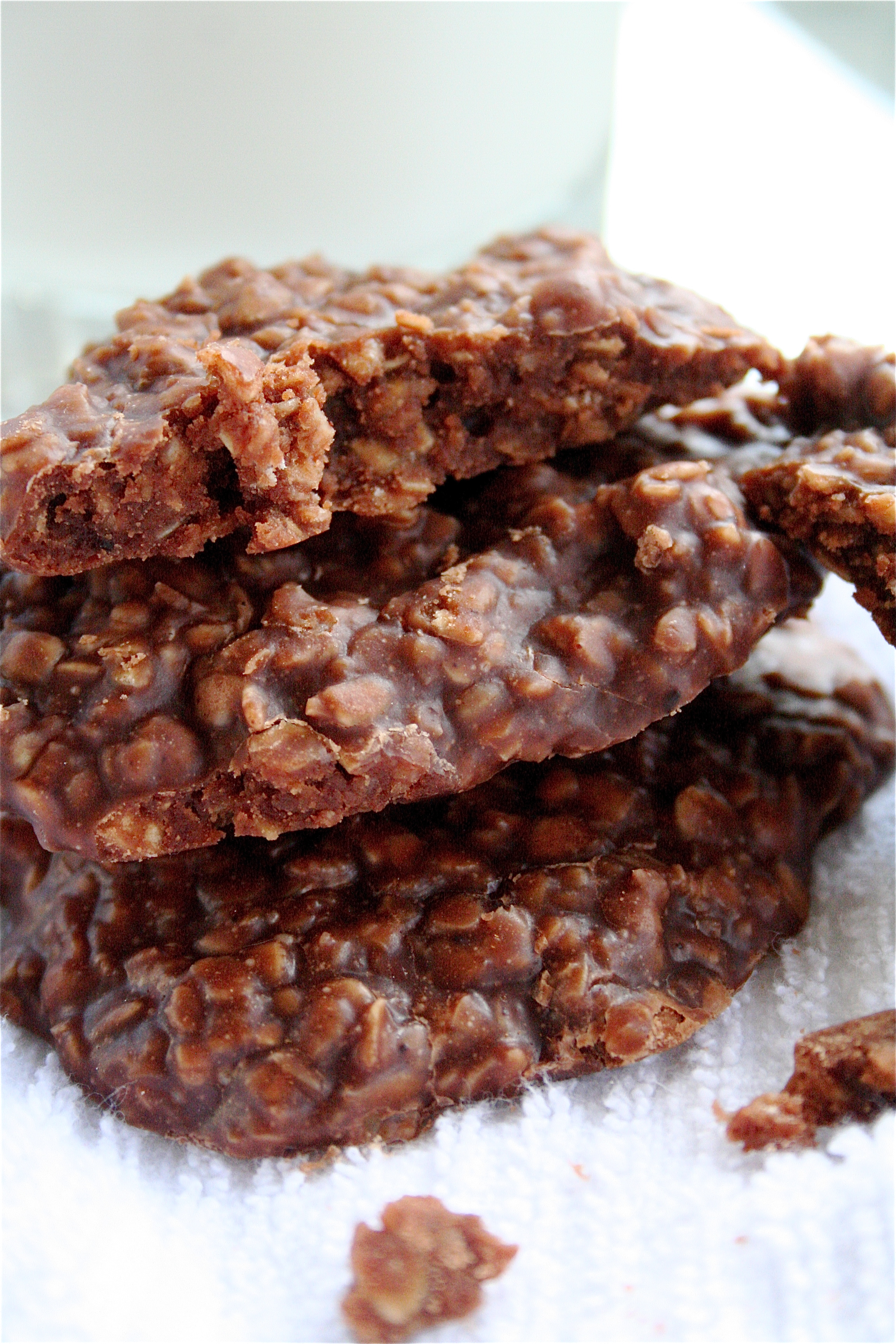
Chocolate No-Bake Cookies
Ingredients
1/2 cup (1 stick) butter
1/2 cup milk
2 cups sugar
1/4 cup unsweetened cocoa
1/2 cup peanut butter
1 tsp. vanilla
3 cups quick oats
1. In a saucepan over medium-high heat, melt butter.
2. Add milk, cocoa, and sugar to melted butter and mix well, bringing mixture to a boil.
3. Boil for 1-2 minutes; remove from heat.
4. Stir in peanut butter and vanilla, mix well.
5. Add oats and stir until fully combined.
6. Drop by spoonfuls onto waxed paper, let cool. The cookies will harden as they cool.
Thursday, August 13, 2015
The Savior’s life and teaching
A group of religion instructors were taking a summer course of the life of the Savior and focusing particularly on the parables. The following story related by President James E. Faust may be useful at this point in helping you understand the difference between studying the parables and applying them.
"When the final exam came . . . the students arrived at the classroom to find a note that the exam would be given in another building across campus. Moreover, the note said, it must be finished within the two-hour time period that was starting almost at that moment.
"The students hurried across campus. On the way, they passed a little girl crying over a flat tire on her new bike. And old man hobbled painfully toward the library with a cane in one hand, spilling books from a stack he was trying to manage with the other. On a bench by the union building sat a shabbily dressed, bearded man in obvious distress.
"Rushing into the other classroom, the students were met by the professor, who announced that they had all flunked the final exam.
"The only test of whether they understood the Savior's life and teaching, he said, was how they treated people in need.
"Their weeks of study at the feet of a capable professor had taught them a great deal of what Christ had said and done. In their haste to finish the technicalities of the course, however, they failed to recognize the application represented by the three scenes that had been deliberately staged. They had learned the letter but not the spirit"

We must be careful
"If we are not most careful with our thoughts and speech, the words we use will use us. Language has its own ethics, and one who communicates truth is like a bright light in the darkness."
Ted E. Brewerton
"If we are not careful, we will begin to chase after the temporal
more than the spiritual."
Michael John U. Teh
"We don't seek out tests, trials, and tribulations. Our personal journey through life will provide just the right amount for our needs. Many trials are just a natural part of our mortal existence, but they play such an important role in our progress. … Sometimes we want to have growth without challenges and to develop strength without any struggle. But growth cannot come by taking the easy way. We clearly understand that an athlete who resists rigorous training will never become a world-class athlete. We must be careful that we don't resent the very things that help us put on the divine nature."
Paul V. Johnson
I would hope that we would strive always to be considerate and to be sensitive to the thoughts and feelings and circumstances of those around us. Let us not demean or belittle. Rather, let us be compassionate and encouraging. We must be careful that we do not destroy another person's confidence through careless words or actions.
Thomas S. Monson
"We must be careful, as we seek to become more and more godlike, that we do not become discouraged and lose hope. Becoming Christlike is a lifetime pursuit and very often involves growth and change that is slow, almost imperceptible. The scriptures record remarkable accounts of men whose lives changed dramatically, in an instant, as it were: Alma the Younger, Paul on the road to Damascus, Enos praying far into the night, King Lamoni. Such astonishing examples of the power to change even those steeped in sin give confidence that the Atonement can reach even those deepest in despair."But we must be cautious as we discuss these remarkable examples. Though they are real and powerful, they are the exception more than the rule. For every Paul, for every Enos, and for every King Lamoni, there are hundreds and thousands of people who find the process of repentance much more subtle, much more imperceptible. Day by day they move closer to the Lord, little realizing they are building a godlike life"
Ezra Taft Benson

All things

The Holy Ghost can bring all things to our remembrance even things we did not notice or pay attention to when they happened."
Henry B. Eyring

Creamy Tomato Pasta
30 minutes, serves 4
for the tomato sauce -
1 1/2 pounds fresh tomatoes (about 9 medium)
1 small onion, finely diced
3 garlic cloves minced
1/4 cup minced fresh basil
olive oil
for the alfredo sauce -
(if you want to lighten it up, halve the alfredo and keep the tomato sauce the same)
1 tablespoon unsalted butter
2 teaspoons flour
3/4 cup whole milk
1/4 cup half & half
2 garlic cloves peeled and crushed
1 cup grated parmesan cheese
1/2 pound farfalle or other short cut pasta
- bring a large pot of water to boil for the pasta.
- start the tomato sauce. bring a large pot of water to boil. score the bottom of the tomatoes, blanch in the boiling water for about a minute, cool and peel. discard skins. roughly chop tomatoes and set aside.
- in a small saucepan, sweat the minced onion and garlic in about a tablespoon of olive oil over medium low heat for about 5 minutes, until soft.
- add the tomatoes to the onion and garlic. if you want a thin sauce like mine, blend the sauce with an immersion blender. cook about 15 minutes until thickened.
- while the tomato sauce thickens, add the pasta to the boiling water and cook according to the package directions.
- while the pasta and tomato sauce are cooking, make the alfredo sauce. melt the butter in a saucepan over medium heat. whisk in the flour until smooth and cook about 2 minutes, until brown.
- whisk in the milk, half & half, and garlic and season with salt & pepper. continuously whisking, bring to a simmer and cook about 2 minutes until thickened. fish out the garlic with a slotted spoon and discard.
- whisk in the parmesan. the sauce will be very thick, so add 1/3 cup of the hot pasta cooking water to the alfredo sauce to thin it out a bit. remove from heat.
- drain the pasta and add to the alfredo sauce.
- mix the basil into the tomato sauce and add the tomato sauce to the pasta. mix well.

Wednesday, August 12, 2015
Teacher
When asked who has made a real difference in our lives, we often think of a teacher. No matter how many years pass, we never forget the person who first opened our eyes to the wonders of science, art, or good books. In fact, we learn very few—if any—of life's valuable lessons on our own. We all need caring, experienced mentors to guide us through our learning experiences.
One teacher made a lasting difference when she turned part of a lesson over to one of her students and let him discover his talent for teaching. Now a professional teacher himself, he says he owes his career decision to that inspired teacher. A mother of three children will never forget the thoughtful softball coach from her youth who helped her find hope in the future when her parents were divorcing. And a businessman still remembers with affection how one of his teachers stayed after school every day to help him learn algebra. Nearly everybody's life has been shaped by unsung heroes such as these.
Your hero may not be a teacher in the traditional sense—someone who stands at a blackboard in front of rows of students in desks. Just as often, it's a parent, a grandparent, a neighbor, a friend. In this sense, we are all teachers, regardless of our profession. We can all be a positive influence in everyday life. We can all uplift and inspire those around us. We can all, with loving kindness, share with others our wealth of knowledge and experience, helping them avoid the mistakes we've made—including what may be the biggest mistake of all: not believing in themselves. With just a few kind, encouraging words, we can open another person's eyes to his or her potential. This is true teaching in its highest form.
To be this kind of teacher is a sacred opportunity. If we give of ourselves to this noble pursuit, it truly can be life changing. And we will likely find that the life that changes the most is our own.
Joni Hilton

All is well
As I think about our pioneer heritage, one of the most moving things that come to mind is the hymn "Come, Come, Ye Saints". Those who made the long journey to the Salt Lake Valley often sang this hymn during their trek.
I am very much aware that all was not well with these Saints. They were plagued by sickness, heat, fatigue, cold, fear, hunger, pain, doubt, and even death.
But despite having every reason to shout, "All is not well," they cultivated an attitude we cannot help but admire today. They looked beyond their troubles to eternal blessings. They were grateful in their circumstances. Despite evidence to the contrary, they sang with all the conviction of their souls, "All is well!"


One may then change it
Some call it journaling. Others call it expressive writing or creating a personal mission statement. Whatever it's called, something happens when we take time to seriously ponder our life and then write about who we are, what direction we want our life to take what our goals and aspirations are for the future. Studies have shown that writing about our personal experiences can improve our mood and even our physical health.
But perhaps one of the greatest benefits of writing about our lives is expressed in this statement attributed to author Bernard de Voto: "The best reason for putting anything down on paper is that one may then change it." Writing our personal story not only helps us understand that story better, it can also impel us to make the story better. After all, as any good English teacher will tell you, the most important part of the writing process is rewriting.
For example, married couples who wrote about a conflict in their marriage were able to better identify what they could do to make positive changes and strengthen their relationship..... "by writing and then editing our own stories, we can change our perceptions of ourselves and identify obstacles that stand in the way of better health."
Nobody's book of life is quite ready for publication yet. We're all rough drafts for now. The process of writing and revising our life story, one that is authentic and real, gives us a chance to reframe the past even as we look forward to a brighter future.
Lloyd D. Newell

Four Cheese White Pizza

Four Cheese White Pizza
Servings: 1 pizza, approximately 6-8 slices
Ingredients
For the dough:***This recipe makes enough for two pizzas.
1/2 cup warm water
2 and 1/4 teaspoon (or one packet) of instant yeast
4 cups (22 ounces) bread flour, plus more for rolling out your dough
1 and 1/2 teaspoons salt
1 and 1/4 cup water, at room temperature
2 tablespoons olive oil
For the pizza:
3 tablespoons olive oil, plus more for brushing the pan
3 teaspoons garlic, chopped (about 3 cloves)
8 ounces (1/2 pound) fresh mozzarella, sliced and coarsely chopped
3 ounces fresh goat cheese, crumbled
1/2 cup part-skim ricotta
1/4 cup Parmesan cheese, grated
3 tablespoons thinly sliced fresh basil

Instructions
1. For the dough: In a 2-cup measuring cup, add your 1/2 cup of warm water.
2. Add the yeast to the warm water mixture and let sit at room temperature until the mixture is bubbly and creamy, about 5 minutes.
3. In the bowl of your standing mixer fitted with the paddle attachment, combine the flour and salt.
4. Add the 1 and 1/4 cup of room temperature water to the water/yeast mixture.
5. With the mixer running at low speed, slowly pour the water/yeast mixture and olive oil into the bread/salt mixture, and mix until the dough forms a cohesive mass.
6. Switch to the dough hook and continue to knead the dough at low speed until elastic and soft, about 5 minutes.
7. Transfer to an oiled bowl (I used cooking spray), cover with a tea cloth or plastic wrap, and let rise until doubled in size, about 2 hours.
8. Once risen, punch down the dough to deflate it and transfer to a clean, lightly floured flat work surface.
9. Divide the dough into two equal portions. If you are freezing one portion of dough, tightly wrap it in plastic wrap and place in a freezer bag. If using the dough immediately, let it rest for at least 10 minutes at room temperature (but no more than 30 minutes).
10. For the pizza: Preheat the oven to 450 degrees.
11. Brush a rimmed baking sheet with olive oil and set aside.
12. In a small bowl, combine two tablespoons of olive oil with the garlic, set aside.
13. On a clean and lightly floured flat work surface, roll out the dough to your desired shape. **Due to the shape of my baking pan and my lack of a pizza stone, I opted for a rectangle.
14. Transfer the dough to the baking sheet and brush lightly with your prepared olive oil/garlic mixture.
15. Layer the mozzarella and goat cheeses, making sure to leave at least a 1/2-inch border of exposed crust.
16. Crumble the ricotta cheese over the pizza, followed by the Parmesan cheese.
17. Bake the pizza until the cheese is melted and the crust is golden brown, about 18 minutes or so.
18. Once out of the oven, lightly drizzle the pizza with the remaining olive oil/garlic mixture.
Subscribe to:
Posts (Atom)